I’m a pitchfork man. Always have been.
Karl, my nearest neighbor, scoffs at my pitchfork. “A torch is far superior,” he says. “Nothing can compare to the destructive power of fire.”
But a pitchfork is a fine weapon, and I keep my tines sharp and ready.
“You’re not even a farmer,” my wife points out. “You’re a tailor. Why do we even own a pitchfork?” I can never come up with an answer while she stands there, looking smug in her bonnet and house dirndl.
When we were first married, Clara used to beg me not to participate in vigilante mobs. She used to try to entice me to stay home with sex, or leftover mutton. Now when I reach for my pitchfork and head out the door she just rolls her eyes.
It is possible that in the past I have exaggerated the danger of some of the men we have gone after. After a tedious day of measuring and sewing, squinting by lamplight, I am weary and covered in chalk and ready to blow off steam with the mob. And tax evasion is not a victimless crime.
But tonight I feel especially justified.
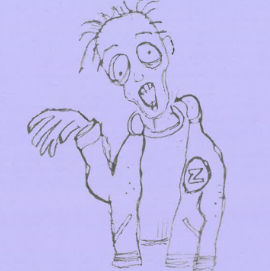
“There is an actual monster on the loose,” I tell her. “He killed that hunchback. And he drowned a little girl!”
“Allegedly,” she says. It sounds even worse in German.
We gather at the town hall, all the men of the village, torch bearers and pitchfork wielders and that one guy with the dogs. Some of the men haven’t heard the story yet; they just saw torches passing their windows and joined out of habit. We discuss amongst ourselves — there is some confusion over which hunchback has been murdered — until the Burgomaster, Herr Vogel, begins to speak.
I do not have much faith in Herr Vogel’s leadership. He is too torch-forward for my taste. I would prefer to see Jürgen, the village doctor, take the position. Although his medical practice is a little free with the leeches, he is respected and well-liked among the townspeople. Also, as a pitchfork man himself, he has a good head on his shoulders. He agrees with my professional assessment that it is pointless to poke fire at a Bavarian culprit — he will almost certainly be wearing wool, which is flame retardant.
Herr Vogel gives his usual rousing, mercifully brief, speech, and then we all head off to the forests and hills, roaring with fury and determination.
The shouting and fist-shaking is difficult to keep up — when you live in the Alps, every destination is uphill — but all in all we are in good spirits and pleased to be chasing an actual monster.

Even another snide comment from Karl (“It is so dark tonight. Thank you for lighting the way with your pitchfork”) does not dampen my spirits. There is nothing like storming the forest on an autumn night, led by baying hounds. My four sharp tines glint in the moonlight.
And then — the monster is sighted! Not by me, I am more in the middle of the mob, but the men in front shout and point and lead us to the windmill. With the murderous monster trapped inside, we once again find ourselves in conflict. “Is it really necessary to burn the windmill down?” asks Jürgen. “A few of us with pitchforks could easily go in and corner him.”
It is a thrilling idea, and a reasonable one, but Herr Vogel says, “Bah!” and I guess we have decided we no longer need grain. The torch-wielders rush forward (Karl smirks and makes eye contact with me as he touches his torch to the building), and then the windmill is on fire.
I was firmly against it, but as the windmill alights I am reminded of Christmas Eve service at the church, the way we light one candle from another until we all stand together in the light. In that moment it doesn’t matter if we are rich or poor, pitchfork men or torch men, we are simply neighbors. This is what I am unable to explain to Clara: how it feels to stand in a crowd united by purpose, surrounded by men whose inseam measurements I know by heart, cheering together while we listen to a monster’s dying screams.