Be he serf or king, when someone is in agony, he has a single hope. As he struggles for breath, scratches his privates, or watches yet another body part fall off, he cries out for one man. Only one man can relieve his pain, cure his illness, make him whole again. A trained professional, with reasonably sharp blades, and a bowl full of leeches.
A barber.
As a medieval barber, responsibility weighs heavy on you. Fortunately, you have leech therapy in your pocket. (Note: Do not put leeches in your pocket.)
This Complete Guide to Medieval Medicinal Leeches will:
- Explain why leeches are the right choice for your business,
- Teach you best practices for application of leeches, and
- Get you draining your customers with ease.
This post is sponsored by Fergal’s Leech House – Family Owned since 517.
Why Use Medieval Medicinal Leeches ?
We have known about the four humors since the days of the Ancient Greeks. These bodily fluids (yellow bile, black bile, phlegm, and blood) must remain in alignment. An excess or deficiency of any one fluid is the source of all illness.
Too much blood is responsible for a bevy of symptoms.

As a medieval barber, you have no formal education of any kind. However, the guy who sold you the barber tools probably told you that bloodletting will relieve everything from bronchitis to the Plague. You know who drinks blood? Leeches.
I know what you’re thinking: You are a busy man. Medieval barbers are responsible for lancing boils, trepanning skulls, amputating limbs — not to mention shaving that circle in monks’ hair. The last thing you have time for is a pet.
But your medicinal leeches are not merely companions: they are medical technology. Leech therapy has been used since the Ancient Greeks, and for good reason: it is the cleanest way to bleed your customers. With the careful placement of a few hungry leeches, your medieval customers can continue living in filth and misery until the age of fifty.
How to Use Your Medieval Medicinal Leeches
1. PREPARE THE CUSTOMER.
Once you have diagnosed your patient with too much blood, it is time to get to work. Position the customer as comfortably as possible. You can seat yourself beside him.
It is possible your customer will be unhappy about the leeches. If he has been drained in the past, he was probably prepared to get sliced and watch his blood pour into a brass bowl. Present your leeches in a similar bowl. It will comfort your worried customer as well as signify your expertise. Nothing says “medical professional” like a brass bowl of writhing leeches.
2. APPLY THE LEECHES.
The number of leeches you will use will depend on the nature of the customer’s condition. If it is a general condition such as a pox, you may place 20 – 30 leeches around the body. If you are treating a specific injury, apply the leeches directly to the afflicted area. Use the appropriate number. For example, bronchitis will require more leeches than hemorrhoids will.

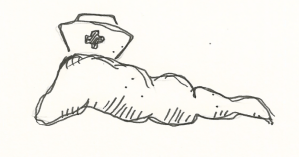
The narrow end of the leech is its head. Once the leech has found a suitable spot, it uses its three sets of jaws to clamp onto the patient’s skin. The leech inserts his proboscis into the customer and begins to drink. Expect some discomfort as the skin is pierced. Distract your customer with gossip about local heretics or tales of milkmaids you have known.
3. LET THE LEECHES DO THEIR JOB.
The procedure may take up to thirty minutes. You will see the leeches engorging as they fill with bad blood. Their body size may increase eightfold.
You’ll know when the leeches have finished feeding because they will release the patient’s skin by themselves. Have patience — do not prematurely pull a leech away! Doing so may cause the leech’s teeth to remain buried in the patient’s skin.
Expect a thin stream of blood to flow from each hole for a few minutes. Also, each leech will leave a permanent Y-shaped mark on the skin. Remind your customer it is a small price to pay to have his humors realigned. This is also a good segue to asking for money.
The Care & Feeding of Your Medieval Medicinal Leeches
Think of it as a partnership. You keep the leeches safe, and they cure your patients.
They cannot live in that brass bowl. Before you bring your leeches home, prepare a large jar for them. Their natural habitat is moist soil and slow-moving water; try to approximate that within the jar. Give them water and perhaps some vegetation. And I cannot emphasize this enough: Poke holes in the top of the jar.
You will probably want more than one jar. Once a leech has fed, it will not require blood again for up to six months. When you collect the leeches after surgery, keep them separated. You will want hungry ones for upcoming procedures.
Inevitably, some leeches will die. You can minimize the number through care and by not allowing your customers to rip them off their skin while screaming. When you need more, procure them from a reputable leech house.
And you may find that the leeches produce more little employees for you. Leeches are hermaphroditic, and they will share those jars. And they have a damn sight more privacy than you and the wife have in your one-room hut.
A Bloodletting Partnership for the Ages
You and the leeches have the same goal: removing blood from your occasionally paying customers. Keep your medieval medicinal leeches safe and happy. Those little bloodsuckers are worth their bloated weight in gold.






Leave a comment