New England, we’ve got a problem. No, not witches. Don’t be silly. It’s vampires.
It’s the 1800s, and Yankee vampires have stricken rural Rhode Island, Connecticut, New Hampshire, Maine, Vermont and Massachusetts. We see the evidence every day. And to save our families we are willing to put aside our unfriendly taciturn nature to join together against a common enemy.
There is a difference, you see, between dead and wicked dead.
Our World
Here in rural New England, we are simple folk. The kind of hardworking folk too busy to pronounce our Rs. The kind of folk who try to grow crops in rocky soil. Repeatedly. For generations. We are an aloof, stubborn, hungry people.

And right now we’re sickly. TB (“T” is an abbreviation for Tu, and “B” is short for Berculosis) is sweeping the region. And this disease… is something you’d prefer to avoid.
The patient gets a high fever, becomes very pale, and starts coughing up blood. As someone recently said, “The emaciated figure strikes one with terror, the forehead covered with drops of sweat; the cheeks painted with a livid crimson, the eyes sunk…the breath offensive, quick and laborious, and the cough so incessant as to scarce allow the wretched sufferer time to tell his complaints.” It can go on for years.
TB is also called Consumption, because the person suffering from it looks like they are being consumed.
It does not only affect those of us in rural areas, of course. Almost a quarter of deaths in the Northeast these days are due to TB.
But the difference between us and the city dwellers, apart from the promise of indoor plumbing this century, is that we know how to stop TB. Call it tradition. Call it Yankee ingenuity. Whatever you call it, we rural New Englanders know that to stop the disease, you have to kill the vampires.
Vampires of New England
We Yankees are not simply flinty and stoic people who are not good at farming. We are also problem-solvers. And if we recognize that our loved ones are being devoured, we are going to track down whatever is doing the eating.

Here is what we have observed:
- When someone has consumption, you can see them wasting away, as though something is sucking out their insides through a straw.
- Consumption often strikes the same family multiple times. First one person dies, and then the others get drained of their lives one at a time.
Our natural conclusion, therefore, is that when TB besieges a family, it causes vampires. If one child in the family dies, they are certain to return at night to feast on their siblings. (Presumably while singing, “I’m not touching you” in a ghostly voice.) This will go on until they are stopped.
Not everyone shares our view. Big-City folk, when they hear about it, tend to use words like “ignorant” and “barbaric” and “inbred.”
But they don’t know what to do about consumption, either. As recently as 1892, doctors were blaming the illness on “drunkenness … among the poor.” They come up with cures like dissolving brown sugar in water or going for a horseback ride. And while that sounds like a lovely way to spend the afternoon, unlike clearing another field of rocks, we know that isn’t going to cure anything.
How to Stop a Yankee Vampire
There’s no easy way to say this: You’ve got to dig up your dead.
I know you don’t want to, and not just because of the quality of the soil you’ll be shoveling. Seeing a loved one decomposing is a horrifying idea. But you want to prevent future deaths, don’t you? If you decide a vampire is attacking your family, we’re pretty sure this is the only way to go.

And sometimes the decision is not, strictly speaking, yours. Sometimes neighbors, or even the town leaders, will inform you that your dead loved one is a vampire. So dig up that coffin and face your loved one’s cadaver.
What you’re looking for is the heart. Vampires have been around for centuries in Europe, and destroying the heart is an Old World tradition. Stakes are a Slavic thing. In these parts, we use fire instead. We also throw in the liver.
Once you’ve got the organs out, find a nonflammable surface (like, I don’t know, a ROCK) and set them aflame. Even if you’re feeling fine, get a whiff of that smoke, just in case — those vampire remains are curative.
Here’s a community that did everything right.
Case Study:
Yankee Vampire Mercy Brown
George and Mary Eliza Brown lived in Exeter, Rhode Island, until tuberculosis took a slow and cruel hold of their family. It killed Mary Eliza in 1882. Their daughter Mary Olive died the next year. Their son Edwin began to show symptoms a few years after that, and he went West to Colorado Springs to try and heal. That left just George and his daughter Mercy at home. And then, at the end of 1891, Mercy started to exhibit symptoms. Edwin, who had been feeling much better, made it home in time to say goodbye. Mercy died in January.
Shortly after that, Eddie began to get sicker. He lost weight, coughed blood all the time, seemed to disappear before his father’s eyes. This much bad luck in one family was suspicious enough for the neighbors to come to the logical conclusion: they were being pestered by a Vampire.
The townsfolk came to George’s door with this information. George gave them his permission to dig up his family, thereby presumably achieving his goal of being left alone. A whole crew of townspeople went, including the doctor (but not, understandably, George). In March of 1892, they dug up the Brown family.
The mother and Mary Olive had decomposed as expected. But Mercy was still fairly well-preserved. It looked as though her fingernails had grown, and when they cut into her skin, they could see a bit of blood. Obviously, her neighbors agreed, she was a vampire.
That’s the kind of fortitude we need, people. Don’t be like that doctor who pointed out that for the entire duration of Mercy’s interment, it had been winter. Don’t say things like, “Freezing temperatures slow decomposition.”
Be like the townspeople who burned her heart and liver and took the ashes back to the Brown household for her brother to eat. Even though Eddie died a few months later, the community should take pride in their steadfastness and wisdom.
Timing is Everything
But Omniscient Narrator, you may be saying, what if it’s too late?
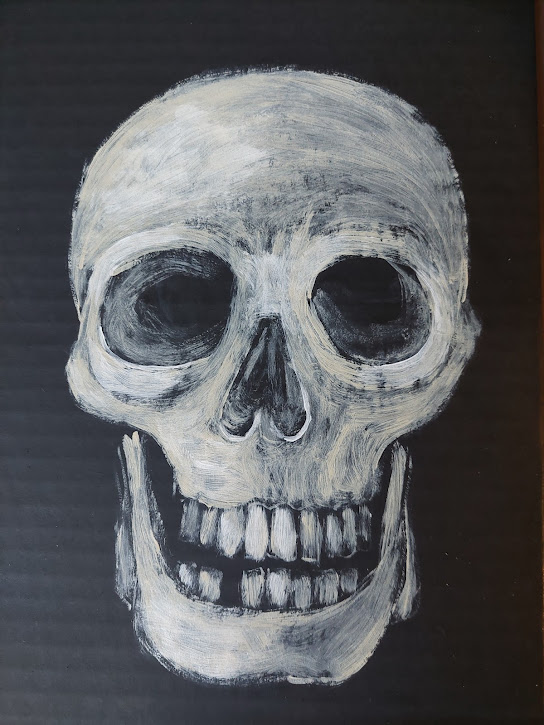
Sometimes, too much time has passed before you realize your loved one is a vampire. In that case, decomposition will be complete. Fear not — You can still deface that grave! But instead of messing with soft tissue, you will have to use the vampire’s bones.

(You may point out that a skeleton vampire has no physical apparatus for sucking or digesting blood. To that I say, Shut up. As a culture we have decided this is what we’re doing. Get with it.)
Plymouth, Massachusetts and some towns up in Maine choose to roll the vampire over so that they are face-down. (Vampires are easily confused.) In some places, they detach the legs or head.
And there is the case in Griswold, Connecticut. We’ll call the vampire J.B., because those initials were spelled out in nails on the lid of his coffin. J.B. was in his fifties when he died of tuberculosis. Five years went by before he was identified as a vampire.
When his accusers dug up his plain wooden coffin (Yankee vampires know the value of a dollar), all that remained of him was bones. And so the Griswoldians rearranged him. They removed his head, they removed the thigh bones from his legs. And they used them to create a skull and crossbones pattern on top of his ribcage.
Did it stop the region’s TB problem? It’s unclear. But it must be acknowledged that J.B.’s final resting position is badass.
Getting Through This Crisis
We live in the mountains, and in the woods, and on our isolated, rarely successful farms. We don’t have medical training. Our news arrives through terse, reluctant conversation with neighbors.
If someone hears about a solution to an uncontrollable danger like TB, we’re going to seize it. Even if it’s distasteful, or heartbreaking, or superstitious. We are desperate, and we’ll do everything we can to keep tuberculosis and/or vampires away from our families.
We rural Yankees are an insular breed. We don’t have a lot of use for the outside world. But until our people stop wasting away, or someone figures out germ theory, we’re going to keep our loved ones close. Close enough to protect from enemies. Close enough to cough on.
You know what you should do now?
- Drink Blood!
- Unravel a Mummy!
- Build a Wall of
Dead People!
Find out WHY in the free e-book
You Done With That?



Leave a comment